Role-aware access
Admin, Finance, HR, Manager and Employee operate through distinct internal permissions and responsibilities.
Purpose before convenienceOpsBridge is designed around who can see the record, who can act, which entity owns the work, what requires approval and what evidence remains afterward. The same principles constrain agents and intelligence.
Security is not a separate page of promises. It appears in how a record is scoped, how work moves and where the product stops a user or agent from crossing a boundary.
Admin, Finance, HR, Manager and Employee operate through distinct internal permissions and responsibilities.
Purpose before convenienceUsers and finance workflows can be constrained to the operating entities they are authorised to manage.
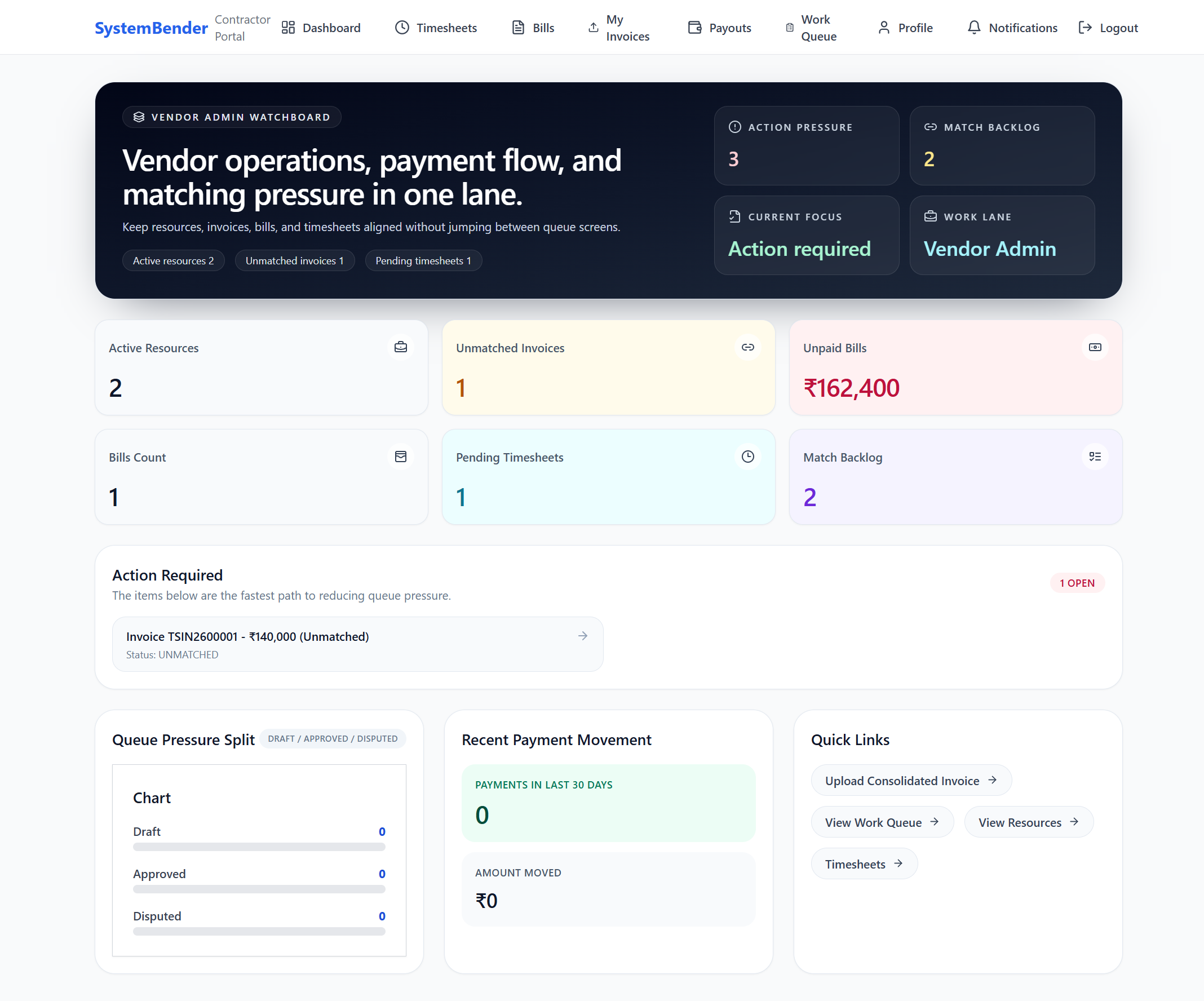
Correct legal contextContractors, Vendor Resources and Vendor Admins use focused external lanes rather than the internal console.
Only the work they needVendor Resources submit their own work; Vendor Admins manage vendor-level commercials and billing context.
Do not conflate rolesApproval, payment, offer, employment and statutory decisions remain with authorised people.
Human accountabilityStatus changes, actors, timestamps and relevant operational evidence remain connected to the record.
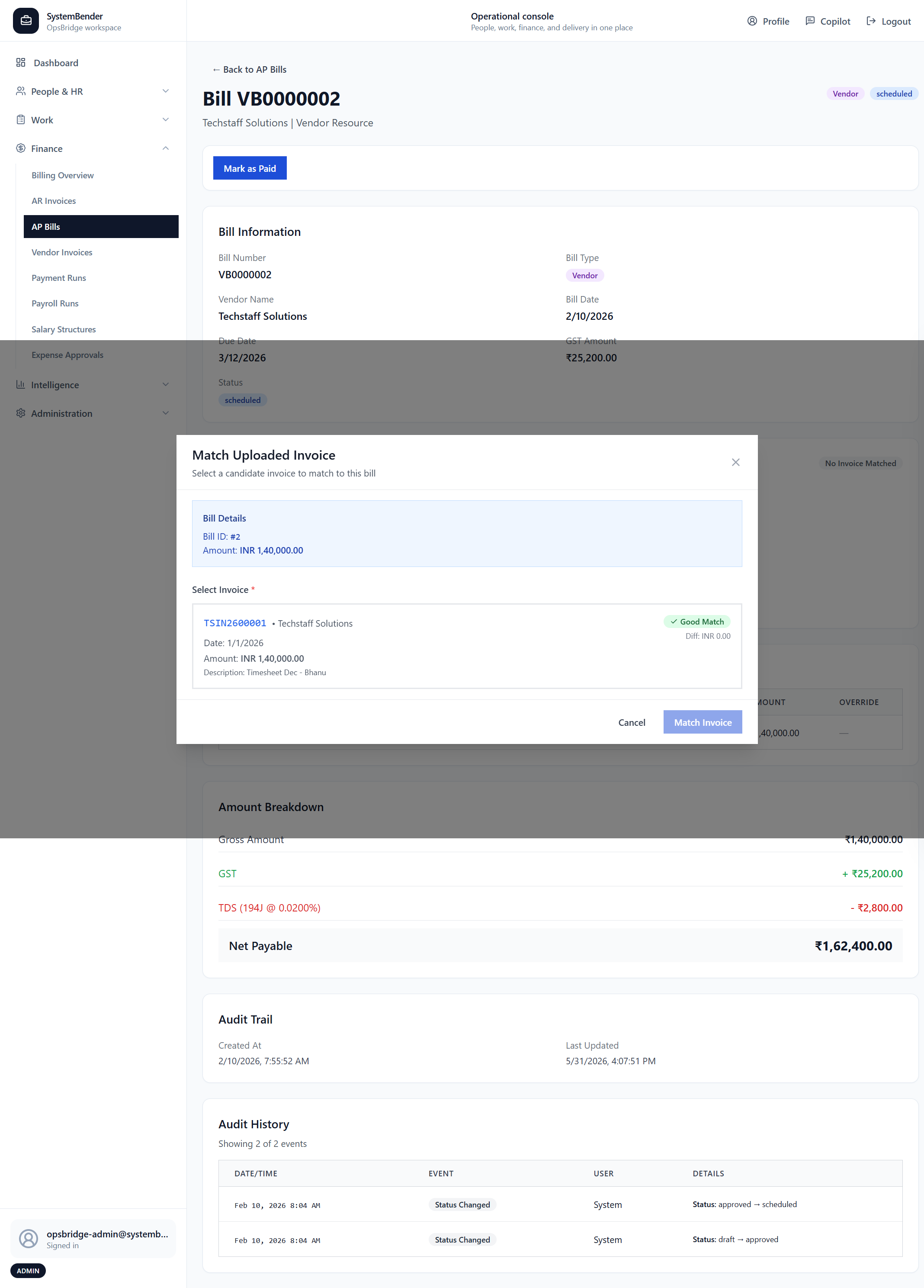
Defensible decisionsThe AP workflow shows the intended control pattern: compare uploaded vendor evidence, preserve amount and tax context, make the decision visible and retain the downstream history.
Vendor invoice evidence is compared with the governed bill before Finance acts.
Vendor-level work and payment context remains outside the internal finance console.
The same authorisation and evidence model applies when automation runs the steps. Agency does not create a shortcut around role, scope or approval.
People can see what the agent is doing, what completed and what requires intervention.
No invisible workAn agent cannot read or act beyond the workflow, role and tenant context it serves.
Authorisation still appliesFinal offers, payments, terminations and statutory filings require authorised human approval.
Humans decideOut-of-policy conditions escalate with evidence instead of being guessed, hidden or silently abandoned.
Context reaches the ownerThe intelligence direction must preserve customer isolation. Cross-customer insight is credible only when the underlying signals are suitable for anonymisation, explicitly consented and never expose another firm's identifiable data.
Customer records remain inaccessible to other customers and are governed inside the owning organisation.
No customer-to-customer visibilityBenchmarks should depend on de-identified attributes, not people, client names or commercial relationships.
Patterns, not identitiesContribution and benefit choices need clear customer terms, granular control and auditable changes.
Permission before network effectOpsBridge is used across SystemBender's India, Singapore and Malaysia operations. Public claims should distinguish multi-entity operating context from the current depth of country-specific payroll and statutory automation.
Tell us the roles, entities, external parties, approvals and evidence your workflow requires. We will map how OpsBridge should contain it.